Articles
Tips for Generator Maintenance: Ensuring Reliability and Long-Term Performance
24 Marzo - 2026
Generator maintenance is a critical factor in ensuring proper operation, extending service life and safeguarding power continuity under any circumstances.
Whether in industrial facilities or critical infrastructure, proper maintenance planning prevents unexpected breakdowns, reduces operating costs and improves overall system efficiency.
In this article, we outline a series of practical recommendations for generator maintenance, applicable to both standby units and continuous-operation installations.
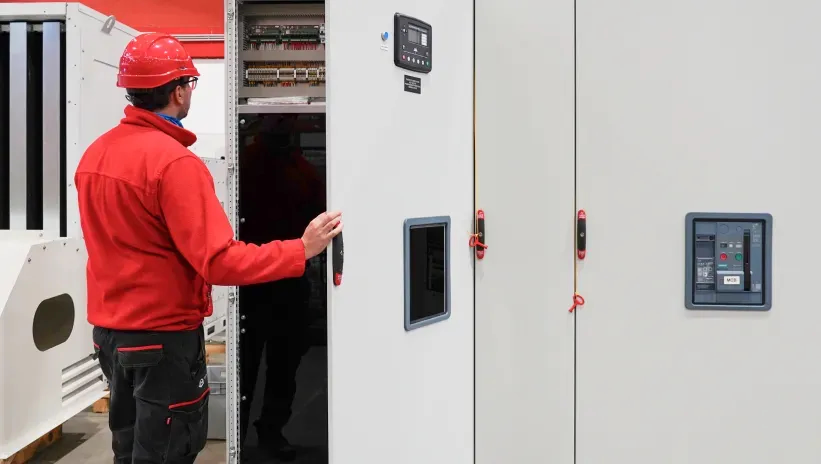
Why Is Generator Maintenance So Important?
A generator is designed to respond precisely when it is needed most. However, its reliability depends directly on the condition of its components and the quality of the maintenance applied.
Proper maintenance of generators enables you to:
- Guarantee immediate equipment availability.
- Prevent unplanned downtime.
- Comply with safety and environmental regulations.
- Optimise fuel consumption.
- Detect faults before they develop into major failures.
In environments where power simply cannot fail, maintenance is not optional — it is a technical requirement.
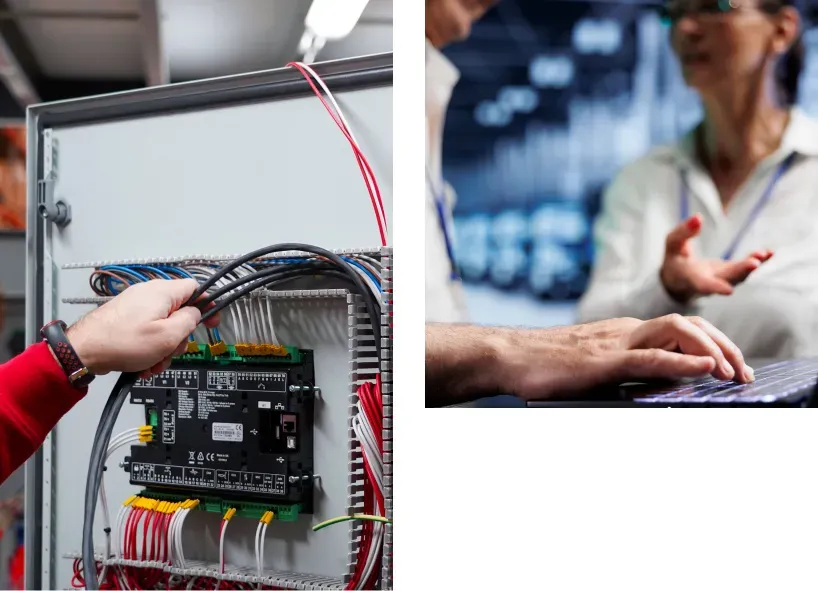
Types of Generator Maintenance
Preventive Maintenance
Preventive maintenance consists of scheduled inspections based on operating hours or time intervals. It is carried out not due to urgent repair needs, but to minimise the likelihood of failures occurring, ensuring the equipment is in optimal condition whenever required.
Typical tasks include:
- Oil and filter replacement.
- Cooling system inspection.
- Battery checks.
- Inspection of belts, hoses and connections.
A robust preventive strategy forms the foundation of any effective generator maintenance plan.
Corrective Maintenance
Corrective maintenance is performed once a fault has already occurred. Although unavoidable in certain situations, it should not form the basis of a maintenance strategy, as it usually involves higher costs and longer periods of downtime.
Corrective maintenance is inherently unpredictable and cannot be scheduled. However, its likelihood decreases significantly when strong preventive measures are in place.
Predictive Maintenance
Predictive maintenance is based on analysing the actual condition of the equipment through sensors, remote monitoring and data analysis. It is particularly recommended for critical generator installations or high-availability environments.
Although it involves higher initial investment due to monitoring and supervision requirements, it provides extremely valuable insights that enhance equipment resilience, efficiency and reliability.
As Lord Kelvin famously stated: “What is not defined cannot be measured. What is not measured cannot be improved. What is not improved inevitably deteriorates.”
This principle perfectly reflects the philosophy of predictive maintenance: measure to anticipate, anticipate to optimise.

Key Recommendations for Generator Installation Maintenance
Generator installation maintenance requires a comprehensive approach to the entire system, not just the generating set itself. The following points are essential:
1. Regular Engine Inspection
The engine is the heart of the generator. Oil levels, filter condition, air intake systems and potential leaks must be monitored carefully. A properly maintained engine ensures reliable starting and stable operation.
2. Electrical System Control
The alternator, control panels and electrical protection systems must be inspected to ensure correct power generation and distribution. Within generator installation maintenance, this aspect is particularly critical to avoid synchronisation failures or load transfer issues.
3. Starting Battery Checks
Batteries are among the most sensitive components in a generator system. It is essential to verify charge levels, terminal condition and overall battery health, as a battery failure may prevent the unit from starting at a critical moment.
4. Fuel System Verification
Fuel tanks, pipelines and filters must remain clean and in good condition. Degraded or contaminated fuel is one of the primary causes of generator malfunction, making proper storage and periodic renewal essential.
5. Load Testing
Simply running the generator without load is not sufficient. Load testing allows operators to assess real operating performance and identify issues that may not appear under no-load conditions.
This type of testing is especially important in critical installations where operational continuity is paramount.
Generator Maintenance According to Installation Type
Not all installations have the same requirements. Generator installation maintenance must be adapted to factors such as:
- Emergency standby use or continuous operation
- Unit power rating
- Environmental conditions
- Sector of application (industry, data centres, healthcare, strategic infrastructure)
A tailored maintenance programme is essential to maximise system performance and extend operational life.
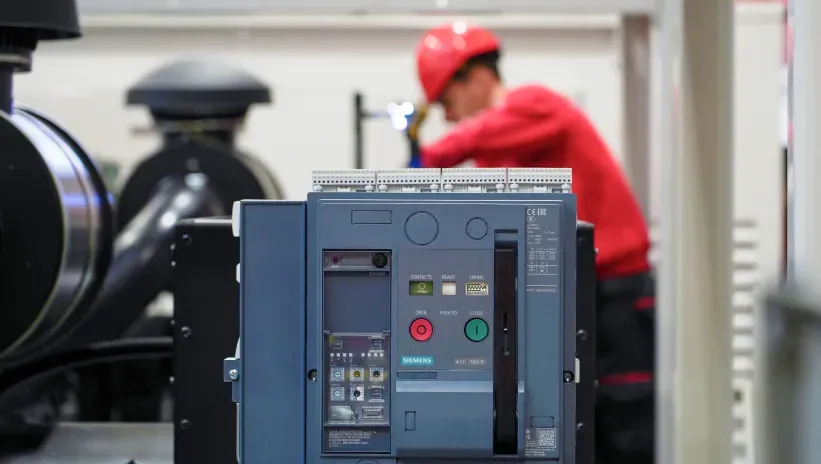
The Importance of Specialised Technical Support
Working with qualified professionals experienced in generator maintenance makes a significant difference. A specialised technical service provider does more than perform routine tasks — it advises, optimises and anticipates potential issues, ensuring that equipment is always ready to respond.
Proper maintenance planning prevents unexpected breakdowns, reduces operating costs and improves overall system efficiency.
In critical power projects, technical expertise and diagnostic capability are as important as the equipment itself.
Conclusion
Generator maintenance should not be viewed as a cost, but as an investment in reliability, safety and operational continuity. Implementing a well-structured maintenance plan, tailored to each installation, is the best guarantee that the power system will perform when it is truly needed.
At Genesal Energy, engineering excellence, customisation and specialised maintenance form part of a single vision: delivering reliable, long-lasting energy solutions for the most demanding environments.
Rellena el formulario con tus datos si quieres uno de nuestros grupos electrógenos o tienes dudas. Elaboraremos un presupuesto a tu medida.
Teléfono/Fax de atención al cliente:
+34 900 730 124
Mail equipo atención al cliente
consultas@genesal.com