Articles
How Generator Sets Work: How an Electric Generator Works Step by Step
23 Marzo - 2026
Generator sets are essential equipment for ensuring power supply in situations where the mains grid is unavailable, unstable or simply does not exist.
From hospitals and data centres to industrial facilities, construction sites and critical infrastructures, understanding how an electric generator works is key to selecting the right solution and ensuring its correct operation.
Its ability to generate power autonomously makes it an indispensable asset when electrical continuity is not an option, but a necessity.
In this article, we explain clearly and in detail how a generator set works, its main components and the process by which it converts mechanical energy into electrical energy.
What Is a Generator Set?
A generator set is a piece of equipment capable of producing electrical energy autonomously. To do so, it combines two fundamental elements:
- An engine (normally powered by diesel or gas)
- An alternator
The engine generates motion, and the alternator converts that motion into electricity. This combination makes it possible to supply reliable power wherever it is needed, either as a primary source of energy or as backup in the event of a mains power failure.
How a Generator Set Works Step by Step
To fully understand how a generator works or how a generator set operates, it is important to know the complete process, from start-up to power delivery.
- Engine start-up. The control system starts the engine, either manually or automatically, for example when a mains power outage occurs.
- Generation of mechanical energy. The engine burns fuel and converts chemical energy into mechanical energy in the form of rotational movement.
- Transmission to the alternator. This movement is transmitted via a shaft to the alternator.
- Production of electrical energy. The alternator converts the mechanical rotation into electrical energy through the principle of electromagnetic induction.
- Power regulation. The generated electricity is stabilised to ensure appropriate voltage and frequency levels.
- Power supply to the installation. Finally, the electricity is safely and continuously distributed to the connected equipment.
This process enables the generator set to deliver stable and reliable power, even in critical environments.
Main Components of a Generator Set
To understand in detail how a generator set works, it is useful to analyse each of its key components.
Engine
The engine is the heart of the generator set. It can run on different fuels, although diesel is the most common choice in industrial applications due to its efficiency and reliability.
Its function is to convert the chemical energy of the fuel into mechanical energy through combustion.
Alternator
The alternator is responsible for converting mechanical energy into electrical energy. It does so through the rotation of a rotor within a magnetic field, generating alternating current.
This is where the electricity used by connected equipment is actually produced.
Fuel system
This includes the fuel tank, pipes, filters and fuel pump. Its purpose is to ensure a clean and constant fuel supply to the engine.
Cooling system
During operation, the engine generates heat. The cooling system prevents overheating and ensures optimal performance, while also extending the service life of the equipment.
Exhaust system
This system allows for the safe evacuation of gases produced during combustion, in compliance with current safety and emissions regulations.
Control panel
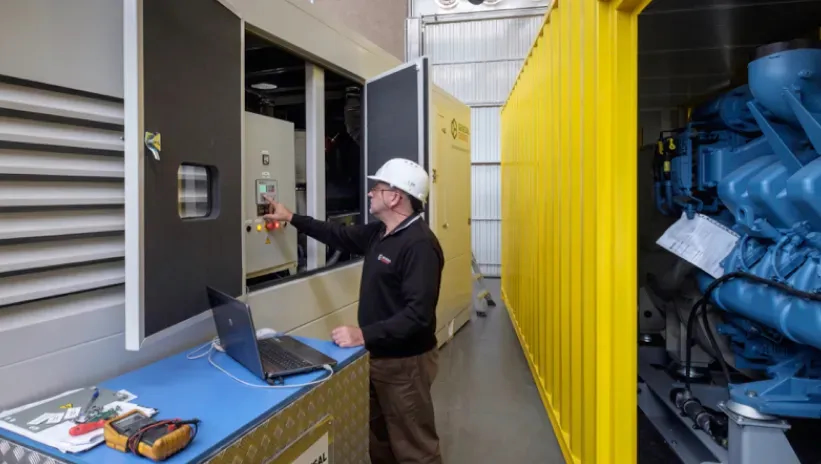
The control panel manages and monitors the operation of the generator set. It controls parameters such as voltage, frequency, temperature, exhaust pressure and fuel level, and enables manual or automatic starting of the equipment.
Difference Between an Electric Generator and a Generator Set
Although the terms are often used interchangeably, there is an important technical distinction:
- Electric generator: usually refers only to the alternator.
- Generator set: refers to the complete assembly, including the engine, alternator and auxiliary systems.
For this reason, when we talk about how an electric generator works in real-world applications, we are usually referring to the operation of the generator set as a whole.
Why Is It Important to Understand How a Generator Set Works?
Understanding how a generator works makes it possible to:
- Choose the most suitable equipment for each application.
- Optimise operation and maintenance.
- Increase the reliability of the power supply.
- Reduce operating costs and downtime.
In critical environments, this knowledge is essential to ensure business continuity.
Conclusion
Now that you know how a generator set works, it is clear that this is a robust, efficient and essential technological solution for a wide range of sectors. Its ability to generate power autonomously makes it an indispensable asset when electrical continuity is not an option, but a necessity.
Understanding how an electric generator works is key to selecting the right solution and ensuring its correct operation.
Understanding how it works is the first step towards choosing a reliable power solution, tailored to each project and ready to perform in any situation.
Rellena el formulario con tus datos si quieres uno de nuestros grupos electrógenos o tienes dudas. Elaboraremos un presupuesto a tu medida.
Teléfono/Fax de atención al cliente:
+34 900 730 124
Mail equipo atención al cliente
consultas@genesal.com