Articles
Do you know what EU Stage V emission standards are? We’ll explain!
28 Enero - 2026
Ensuring the quality of the air we breathe has gained great importance all over the world, and Europe is no exception. That’s why since years ago, the European Union has established limits on the emission of gas and polluting particles. In 2016, the European Parliament and European Council hardened restrictions on internal combustion engines installed inside non-road mobile machinery amongst which generator sets are included.
Introduction to EU Stage V regulations
At present, the legislation is increasingly more restrictive regarding polluting emissions, and greatly limits the harmful substances originating from engines which operate on fossil fuel. These substances include nitrogen oxides (NOx), carbon oxide (CO), hydrocarbons (HC), particulate matter (PM) and control of the particle number (PN). The European Non-Road Mobile Machinery Directive (NRMM) 2016/1628/CE or EU Stage V norms, came into effect the 1st of January 2019 abolishing the regulations which up until that point had regulated the emissions emitted by industrial machinery.
The new regulations affect all power ratings and all mobile and industrial equipment operating with compression or spark ignition engines in non-stationary applications. It’s important to note though, that emergency generator sets installed in a stationary manner are not included in the regulations’ field of application.
The European Non-Road Mobile Machinery Directive (NRMM) 2016/1628/CE or Stage V norms, came into effect the 1st of January 2019.
Transition period
The legislation contemplates a transition period in which for a limited amount of time, transition engines can be introduced into the market, as well as the machinery in which they’re integrated. Recently, the EU regulation 2016/1628 coming into force on July 1st, has been modified through the grant of an extension of 12 months following the previously established period. With these new time frames, the sale of STAGE IIIA generator sets of power ratings of less than 56KW and more than 130KW, manufactured until 30th June 2021, will be possible until December 2021, and the same date applies to those with power ratings between 56 and 130 kW.
The hardening of the legislation forces manufacturers to implement a correct exhaust gas after-treatment strategy in order to control and measure the engine emissions and allow the compliance with the new Stage V emission standards. These technical solutions which allow the containment of internal combustion engine emissions to within the limits established by the new regulations are:
- DOC (Diesel Oxidation Catalyst), diesel oxidation catalyst designed specifically to reduce the emissions of carbon monoxide (CO), hydrocarbons (HC) and particulate matter (PM), converting the exhaust gases’ harmful matter in carbon dioxide (CO2) and water (H2O).
- DPF (Diesel Particulate Filter), particle filter which retains the polluting particles present in exhaust gases, commonly known as soot.
- SCR (Selective Catalytic Reduction), selective catalytic reduction process through the chemical reduction of nitrogen oxides (NOx) present in exhaust gases due to injection of AdBlue, an aqueous urea solution of 32,5 % water and 67,5 % deionized water.
- EGR (Exhaust gas recirculation), recirculation or redirection of part of the exhaust gases with the objective of reducing the nitrogen oxide (NOx) content of the exhaust gases. This system tends to be employed along with DOC or DPF after-treatment systems, thus reducing particle emissions.
How has Genesal Energy adapted to these new regulations?
The integration of these after-treatment systems entail notable technical differences in comparison with generator sets that do not have to comply with these emission standards.
For instance, in terms of mechanical components, it’s necessary to carry out modifications in the design of the generator sets which allow the accomodation of the aforementioned technical solutions as well as their correct operation. Some of the new requirements are as follows:
- Guarantee adequate cooling in strategic areas.
- Complete redesign of the exhaust outlet system in order to integrate the new systems (DOC-DPF-SCR).
- More demanding thermal insulation in order to maintain the exhaust gas temperature within adequate values.
- The canopy’s design, under the premise of a compact product to allow saving on transport, is more complex as it is subject to more restrictions.
Regarding the electrical area, the control system must maintain the combustion engine at a minimum load of approximately 25 % nominal power so that the exhaust gas temperature always remains within the minimum values to allow the correct operation of the exhaust gas after-treatment systems. In order to achieve maintenance of this minimum load, it’s important to carry out the following:
- Install a load bank at the genset’s power output. This load bank is comprised of electrical resistors, switched automatically via the control system according to the system’s requirements.
- For safety reasons, the genset must also have a controlled breaker, a contactor for instance, so that if ever the exhaust gas after-treatment system were to fail, it would be possible to isolate the loads to be powered by the generator set. From that moment onwards, a forced regeneration of the system would be necessary for the genset to begin operating again in adequate conditions. This is an extreme situation which would never occur if the unit’s operation and maintenance conditions followed those recommended by the manufacturer. However, the system developed by Genesal Energy allows the postponement of this forced regeneration for a certain amount of time so that the user doesn’t have to cut off power supply in an emergency.
In order to be aware of the status of the gas after-treatment system at all times, communication between the engine’s electronics and the genset’s control system must be perfect. The reason is simple: the correct operation of the whole system depends on this communication. The engine needs external data transmitted to it by the control panel and viceversa, this way, the engine will always operate in the correct manner to be able to comply with emissions restrictions, even when the installation powered by the genset doesn’t require it, and is operating isolated.
It’s necessary to carry out modifications in the design of the generator sets which allow the accomodation of the aforementioned technical solutions.
Supply of 2 x GEN33KI Stage V emission compliant gensets for Germany
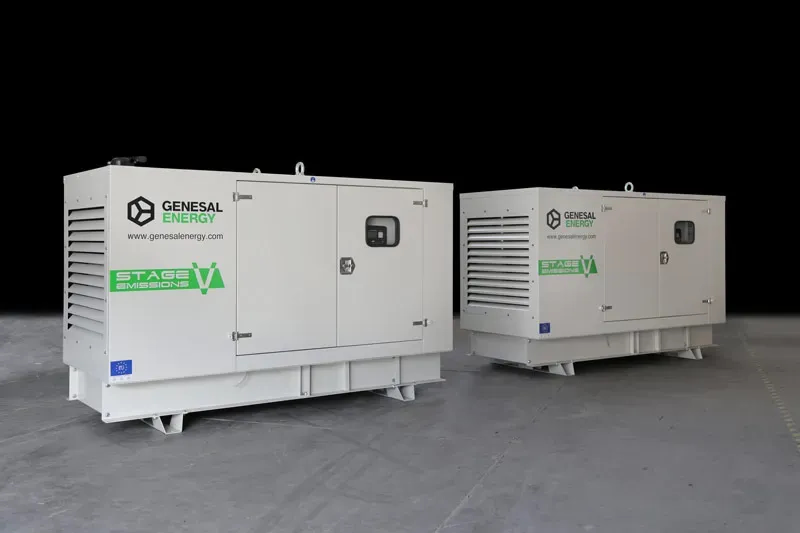
At present, Genesal Energy is developing its new range of generator sets with Stage V engines, according to the emission criteria established by the regulations.
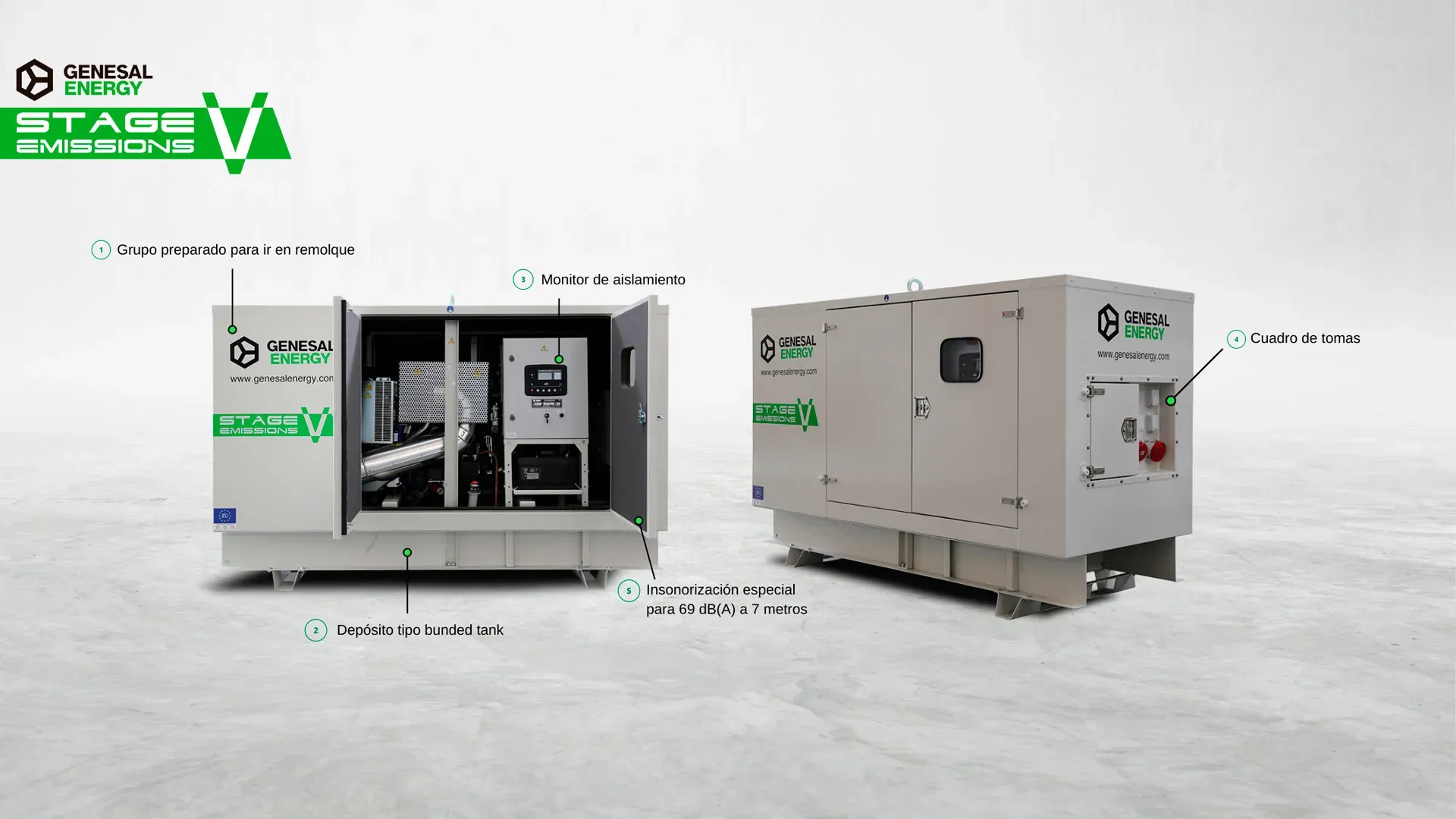
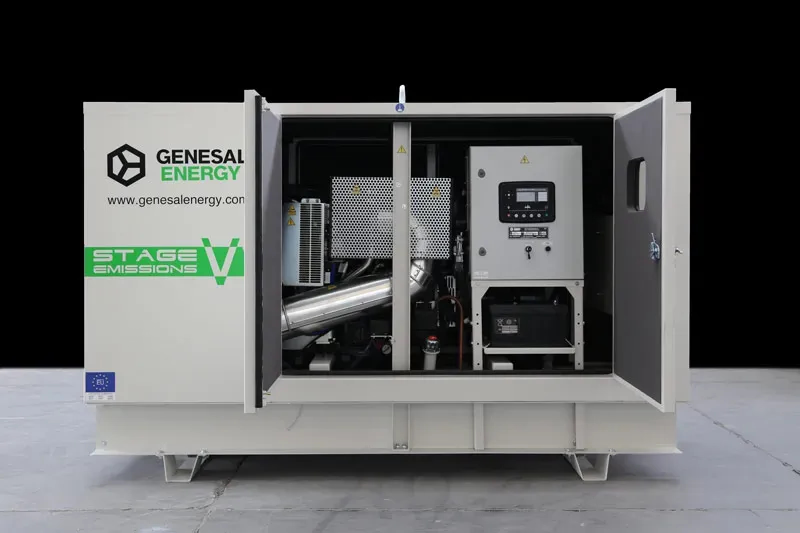
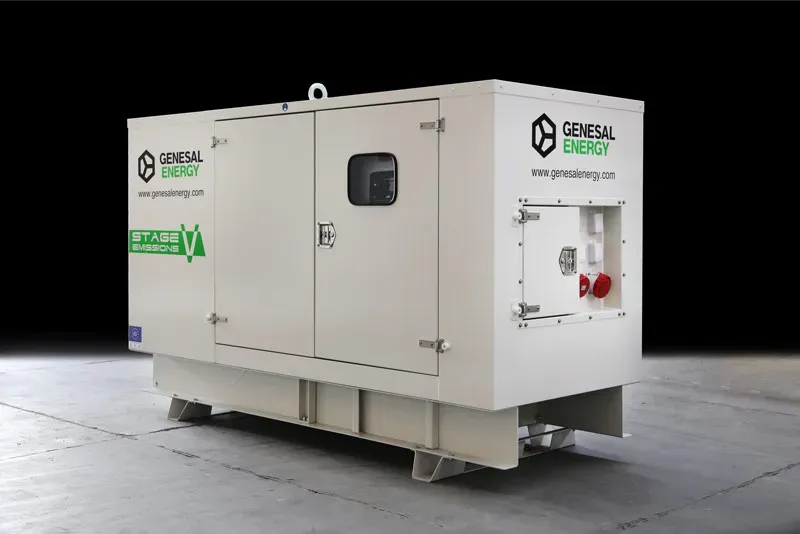
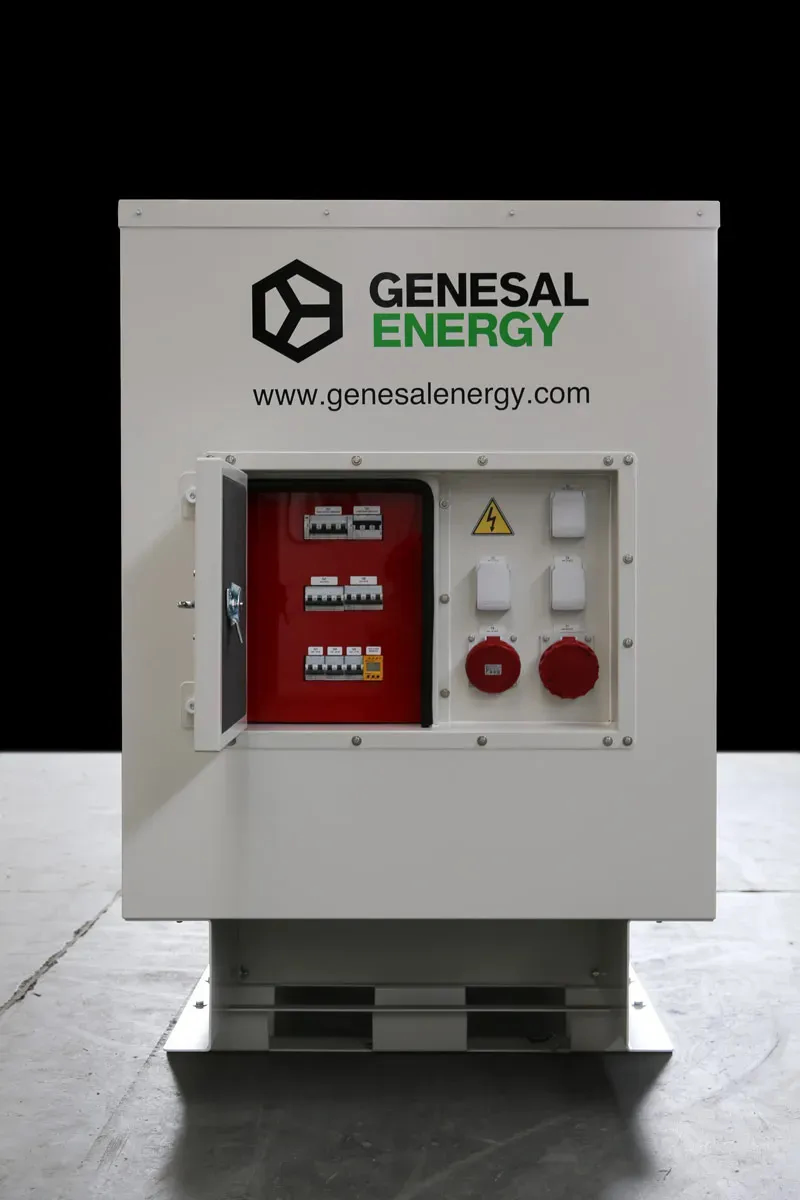
Accordingly, we’ve recently manufactured and supplied two emergency generator sets for a governmental project in Germany, prepared for trailer mounting and following the European Union’s emission regulations. These units feature socket panels for power supply to different machinery wherever required.
Furthermore, resistors were installed in order to guarantee a minimum level of load at all times (these resistors are only connected after a certain amount of soot has accumulated, until that point, a minimum load level isn’t guaranteed), ensuring a work temperature which will prevent the cristalization of exhaust waste and, consequently, the malfunction of the genset.
The premise of these gensets was to make them as autonomous as possible as well as versatile, integrating a socket panel into the canopy to connect different equipment to the unit. Another of the client’s requests was the soundproofing, for which baffles were installed inside the canopy in order to provide an average sound level of 69 dB(A) at 7 metres
Features
- Generator set prepared for trailer mounting
- Bunded tank
- Isolation monitor
- Socket panel
- STAGE V engine
- Special soundproofing to provide 69 dB(A) at 7 metres
The new genset range with EU Stage V engines puts the latest technology within the client’s reach. Always a challenge for Genesal Energy, this technology materializes thanks to the CETED’s (or Technological Center for Distributed Energy, created to conceive advanced, bespoke generator sets compliant with each client’s requirements) strong commitment to R&D. Always from scratch and according to your needs.
Rellena el formulario con tus datos si quieres uno de nuestros grupos electrógenos o tienes dudas. Elaboraremos un presupuesto a tu medida.
Teléfono/Fax de atención al cliente:
+34 900 730 124
Mail equipo atención al cliente
consultas@genesal.com